If you own a Sarasota condo you plan to sell this year, the single most important document in your file is not your granite countertop invoice or your last appraisal. It is a report your association either has or does not have: the Structural Integrity Reserve Study.
Buyers writing offers in July 2026 already know this. Their lenders certainly do. And the gap between what a compliant building sells for and what a non-compliant one sells for is widening every month, quietly, without ever showing up in the listing description.
The Thesis, Stated Plainly
Your unit's finishes set the top of your price range. Your building's compliance file sets whether you can access that range at all. In today's Sarasota condo market, a completed SIRS and current milestone inspection function as a marketing asset. An incomplete one silently reprices your listing to cash-only, which in Sarasota County means competing for a specific slice of buyers rather than the full market.
Everything below is evidence for that claim.
Whether Your Building Is Triggered
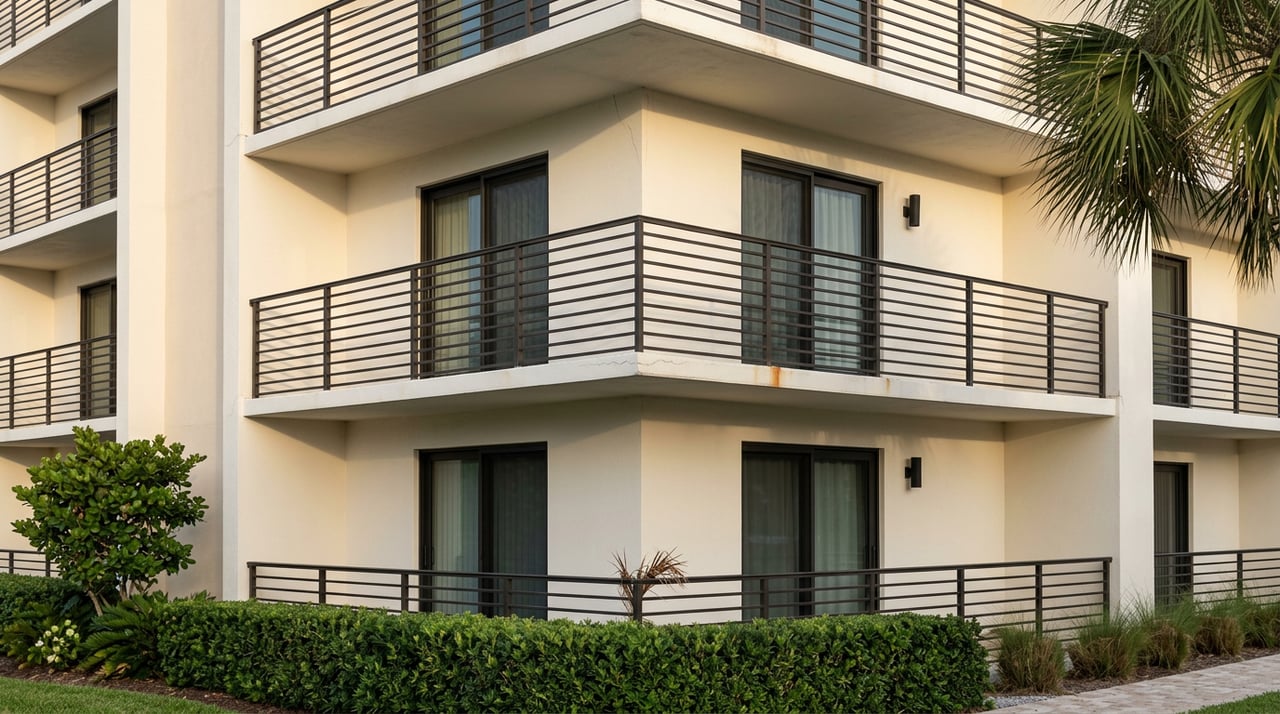
Florida's post-Surfside framework, established by SB 4-D and refined through SB 154, HB 1021, and HB 913 (effective July 1, 2025), applies to residential condominium and cooperative buildings three or more habitable stories tall. The trigger points that matter for Sarasota sellers:
- 30 years of age based on the original certificate of occupancy, then every 10 years thereafter
- 25 years of age if the local enforcement agency has determined coastal proximity justifies an earlier review, generally within three miles of the coast
- SIRS due December 31, 2025, with an extension to December 31, 2026 for associations completing the study together with their milestone inspection
For a Sarasota seller, the practical read is this: nearly every condo building on Siesta Key, Lido Key, Longboat Key, and Bird Key falls inside the coastal band. Most downtown towers do as well. If your building was occupied before 2001 and sits on or near the water, you are in scope. The Florida DBPR maintains the current milestone inspection guidance and the statutory text lives at Florida Statute 553.899.
The Financing Cliff Nobody Prices Into The MLS
Here is the mechanism that catches sellers off guard.
A condominium building that has not completed its SIRS is generally treated as non-warrantable by Fannie Mae, Freddie Mac, and FHA. Non-warrantable means no conventional 30-year mortgage. In practice, a buyer who needs financing cannot close, regardless of how much they love your unit.
That matters more in Sarasota than almost anywhere else in Florida because of who is already buying here. Per the RASM February 2026 report, cash accounted for roughly 47 percent of Sarasota County single-family closings and 68 percent of condo and townhome closings. On paper, cash dominance in the condo segment might look like a cushion. It is not. It means the financed buyer pool is already thin, and non-warrantable status shrinks it further, down to the specific subset of cash buyers willing to accept the compliance risk of an unstudied building.
Two units listed at the same price per square foot in adjacent buildings can face completely different demand curves. One draws the whole market. The other draws roughly one buyer in three.
Compliant vs. Non-Compliant At The Point Of Listing
| Listing dynamic | Building with completed SIRS and milestone inspection | Building without completed studies |
|---|---|---|
| Available buyer pool | Full market, including conventional financing | Cash buyers only, further narrowed by risk tolerance |
| Typical days on market | Tracks the segment average | Extended, often materially |
| Pricing power | Documentation supports asking price | Buyers discount for uncertainty |
| Inspection contingency risk | Contained | Elevated; buyers may withdraw after document review |
| Assessment exposure | Known, priced, disclosed | Unknown, and buyers assume the worst |
Sarasota County had roughly 2,700 active condo listings earlier this year and condo inventory sitting above eight months of supply through Q1 2026 according to RASM. In an eight-month market, the building's file is what separates a 45-day sale from a 180-day sale.
The Pre-Listing Document Package
Assemble this before you sign a listing agreement, not during the buyer's due diligence period. Florida Statute 718.503 already requires most of it be delivered to buyers with a three-day right of rescission, and buyers in 2026 are asking for it before they write.
- The most recent milestone inspection report, including any Phase 2 findings and repair verifications
- The current SIRS, along with prior reserve studies if the association has them
- Current-year budget and the two prior years, plus the most recent audited or reviewed financials
- Reserve account balance from the bank or the accountant, not just the budget line
- Board meeting minutes from the last 24 to 36 months, especially any meeting where assessments, inspections, or major repairs were discussed
- Written notice of any approved, pending, or contemplated special assessment
- The master insurance declaration page, with wind and flood limits and deductibles
- Permits and contracts for envelope, roof, balcony, garage, or structural work
- The certificate of occupancy or first-occupancy date, to verify the inspection cadence
You can cross-check permit activity through the Sarasota County Building Division or the City of Sarasota's building services. If the association manager tells you a document does not exist, that itself is disclosable information.
Pricing The Assessment Honestly
Some Sarasota buildings have absorbed the reserve reckoning without drama. Others have seen HOA fees rise 40 to 50 percent since 2022, and downtown units have surfaced pending assessments in the $50,000 to $150,000 per unit range once milestone findings were priced in.
If your building has an approved assessment, you have three options at listing:
- Pay it before closing. Cleanest presentation, best price.
- Credit the buyer at closing. Works when the number is known and financeable.
- List it into the price. Honest, and it filters for buyers who have already accepted the math.
The option that does not exist is silence. Concealment of a known pending assessment creates a post-closing liability that dwarfs the number you were trying to hide. Florida disclosure law does not reward creative timing.
What This Looks Like For A Remote Seller
If you live in Chicago or Toronto and your Sarasota condo is the second home you inherited or the one you have not been back to since 2023, the document assembly is the entire problem. Board minutes are rarely emailed proactively. Managers turn over. Reserve studies get finalized, then buried in a portal nobody uses.
The pre-listing window is when a local representative earns their keep: making the records requests to the association, walking permits at the county desk, sitting for the milestone engineer's follow-up call. It is unglamorous work, and it is the work that determines whether your listing draws the full market or the thin one.
FAQ
Does a completed SIRS mean my building has "passed" anything? No. The SIRS is a funding plan, not a grade. It quantifies what critical components will cost to maintain and replace, and it forces the association to fund those reserves. A building can have a fully completed SIRS and still have a large upcoming assessment. What matters to a buyer's lender is that the study exists and reserves are being funded per the schedule.
My building is two stories. Am I exempt? The milestone inspection and SIRS mandates apply to residential condominium and cooperative buildings three or more habitable stories tall. Two-story buildings sit outside the state framework, though buyers may still ask for reserve documentation and your association's own governing documents may require it.
We are past the 30-year mark and nothing has been done. What now? The 25 and 30-year triggers do not go dormant. Noncompliance carries daily fines and, in extreme cases, unsafe-building referrals. If you are the seller, the timeline for the association to catch up will almost certainly exceed your ideal listing window. That is worth a conversation before you invest in staging.
Is a "structural integrity reserve study" the same as a regular reserve study? The SIRS is a specific study focused on eight structural components defined under HB 913: roof, load-bearing structure, fire protection, plumbing, electrical, waterproofing, windows and doors, and any related item over $25,000. Many well-run associations also carry a broader reserve study covering non-structural items like pools and parking surfaces. Buyers now expect both.
If you own a Sarasota condo and want a candid read on where your building sits in its compliance cycle before you list, I can help you assemble the document package, interpret the numbers, and price the outcome honestly. Reach out to Carolyn and let's connect.